The Quiet Disappearance of the Heroic Man
How masculinity went from saving the world to optimizing it, and what disappeared from the definition of competence
How masculinity went from saving the world to optimizing it, and what disappeared from the definition of competence
For most of the twentieth century, masculinity followed a remarkably clear script. Men built things, crossed oceans, flew aircraft, fixed engines, and occasionally, at least in fiction, saved the world before dinner. The masculine ideal was defined by direct engagement with the world: mastery over machines, danger, distance, and the unknown.
The archetype was easy to recognize. James Bond walked into a room already in control of it. Indiana Jones stepped into danger with the casual confidence of someone who assumed he would find a way out. The fighter pilots of Top Gun carried the same promise: competence, courage, instinct, and a certain indifference to fear. These figures were exaggerated. The expectation behind them wasn’t.
The setting has shifted. The contemporary arena is rarely physical. More often, it is mediated through systems, platforms, and networks. The adversary is no longer danger, but inefficiency. Performance is measured, tracked, refined. Control still matters, but it has changed shape. Where masculinity once imagined mastery over machines or landscapes, it now expresses itself through discipline, optimization, and an impressive command of apps.
Most of the time, that reads as capability. It isn’t the same thing.
It all works beautifully, as long as everything works. But one sometimes wonders what happens when the lights go out, and none of it does.
Who exactly is the hero today?
Across parts of Europe, conversations have taken on a different tone: preparedness, emergency kits, water, batteries, candles, a portable radio. Lists that assume daily life might not remain as stable as it appears. Reading through one of those lists gives the question a less theoretical edge.
Living alone in a city apartment is often framed as independence. It offers control, quiet, and the pleasure of arranging life exactly as you like it. It works until something breaks. The familiar version is reassuring: somewhere nearby, a calm, competent man handles the problem without turning it into a discussion.
Reality is less convenient. Not quite MacGyver, but close enough for the absence to register.
Nothing collapsed. Firefighters still run into burning buildings. Rescue workers still step into situations most people instinctively avoid. The men who act when action is required are still there; they just no longer define the cultural fantasy.
In most contexts, that looks like progress. But in certain moments, the older image of masculinity does not feel outdated.
It feels more defined.
And noticeably less available.
The Soft Launch of Everything
Nothing is clearly said anymore, but everything is already understood
Nothing is clearly said anymore, but everything is already understood
A relationship rarely begins with a sentence. More often, it begins with repetition. The same person appearing in the background, then closer, then part of the scene. No formal entrance, no explanation. Enough visibility for people to register the change, and enough ease for them to behave as though it has already been accounted for.
At work, logistics can make anything sound reasonable. “I’ve been busy” can contain almost anything. A new role. A move. A deal. A project that is already too advanced to be treated as news. One detail appears. Then another. By the time anyone names the situation, it has already taken its place in the room.
That is the efficiency of the soft launch. It allows something to become visible before it becomes accountable. There is movement, but no official version. There is a shift in the atmosphere, but nothing so definite that it requires a public explanation. If people receive it well, it looks intentional. If they don’t, there was never enough on record to hold against it. The advantage is obvious. A soft launch removes the awkward theatre of definition. Once something is said plainly, it becomes available for comment. People can question it, approve it, resist it, or gossip about it. Language gives them an object to handle.
The soft launch offers them a silhouette instead. Everything remains adjustable. A relationship can be introduced as a coincidence before it becomes a fact. A decision can appear as a natural progression. A plan can change shape without requiring anyone to admit that it changed at all.
And because the format is familiar, no one stops it. People understand their role. They are not invited to interrogate. They are invited to notice. So the thing continues, gathering weight through repetition, until it no longer feels new enough to challenge.
The story never arrives as an announcement. It enters the room in fragments, and by the time anyone looks directly at it, it is already sitting there.
The Erosion of Desire in the Age of Infinite Images
Fashion once relied on distance, delay, and the pleasure of not having something immediately. In a culture of endless visibility, beauty still circulates, but desire has less and less room to build
Fashion once relied on distance, delay, and the pleasure of not having something immediately. In a culture of endless visibility, beauty still circulates, but desire has less and less room to build
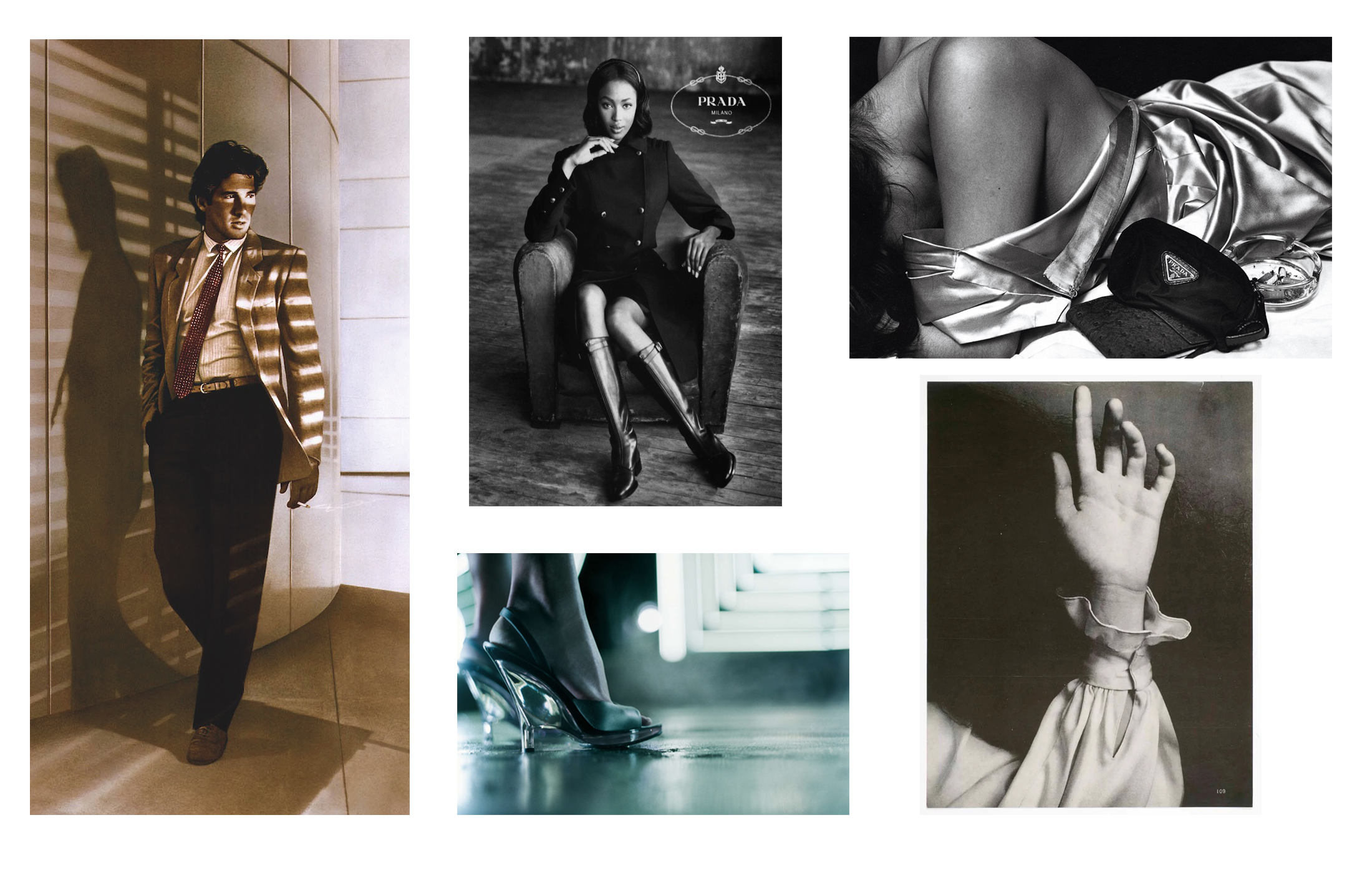
Fashion used to know the value of distance. Not just physical distance, but the kind that holds the space between seeing something and wanting it. There was power in the pause, in the delay, in the small cruelty of not being able to access it immediately.
Now the gap barely exists.
A look appears on the runway, and before it has had a chance to become memorable, it has already become content. Someone posts the full collection, someone else edits the best looks, someone zooms in on the bag, someone calls it genius, someone calls it tired, someone finds the cheaper version by Friday. A collection is seen, shared, explained, ranked, memed, copied, and exhausted before most people have even had a private thought about it. By the time it reaches you, it already feels socially processed.
There was a time when fashion asked for a longer attention span. You saw a campaign in a magazine and lived with it for a while. You tore out the page. You kept thinking about a coat you could not afford, or a woman in a photograph who seemed to belong to a life more composed than your own. The image had time to seduce you. It stayed unresolved. It kept a little mystery.
Now, mystery barely survives first contact.
That may be the real loss hidden inside all this visual abundance. It is not that beauty has disappeared. If anything, beauty is overproduced, overlit, and endlessly available. The problem is that beauty now arrives with too much administration: too much framing, too much explanation, too much immediate consensus.
Nothing gets glimpsed anymore. Everything must be delivered.
Fashion used to benefit from the fact that not everything was instantly accessible. You could sense a world before you could enter it. A woman in a 90’s Prada campaign did not arrive as relatable. She arrived as a proposition, a disturbance, a visual argument for becoming someone else, or at least becoming someone with better posture and colder lighting.
What we have instead is appreciation. Immediate, fluent, highly informed appreciation.
You know the reference, you know the brand, you know the silhouette, you know who wore it first, and you know whether it is already over. You can identify quality in seconds. You can even admire it sincerely. But admiration is clean. Desire is not. Admiration is often where taste ends, and wanting used to begin.
That is what we are missing.
Not beauty, not taste, not appetite. Appetite is everywhere. The culture runs on it. What vanishes is the slower, more difficult form of desire, the kind that could survive because it was not instantly turned into content, commentary, and product.
Perhaps fashion’s problem is no longer whether it can make us look. It can, effortlessly. The harder question is whether anything can still stay with us long enough to become desire.
The Night I Accidentally Joined a Starseed Conversation
A casual drink after yoga turns unexpectedly cosmic, and reveals less about the stars than about the quiet ways people try to explain feeling out of place in a “perfectly functioning” world
A casual drink after yoga turns unexpectedly cosmic, and reveals less about the stars than about the quiet ways people try to explain feeling out of place in a “perfectly functioning” world
Yoga classes are usually quiet in a very specific way.
Not true silence. Managed silence. The kind filled with breathing, stretching, and an unspoken agreement that everyone is, officially, reconnecting with themselves while privately thinking about dinner, laundry, or whether they sounded strange in that email they sent at 14:07.
The interesting part tends to begin afterwards.
That evening, a few of us went for drinks. Six women from class around a small table. I was the oldest by a comfortable margin, which I mention only because age occasionally turns an ordinary conversation into field research. The others were somewhere between twenty-five and thirty-five: smart, articulate, perfectly normal people. No one looked especially likely to announce spiritual origins over white wine.
The conversation moved easily enough. Work. Travel. Relationships. The usual evidence that everyone is tired.
And then someone said it.
Starseed.
There was a brief pause. The kind that appears when a conversation quietly leaves the atmosphere.
I didn’t immediately understand what we were discussing, but everyone else remained impressively composed. A few heads nodded with the seriousness usually reserved for childhood wounds, attachment styles, or interest rates. Apparently some people are not entirely from here. Their souls originate elsewhere. Different star systems. Different frequencies. Different missions. Earth, from what I could gather, is not their first environment.
At that point I found myself wondering who exactly gets sent to psychiatric institutions these days, and who simply gets a second glass of wine and the floor.
I took a sip of my drink and tried to look like someone who moves through intergalactic material with ease. Inside, however, I was doing the quiet social calculation every adult knows well: is this the moment to ask a question, or the moment to develop excellent posture and observe.
So I listened.
Someone mentioned the Pleiades, which I know primarily as a word the internet occasionally suggests when you have misspelled something else. Someone else spoke about energy frequencies. There was gentle agreement around the idea that certain people have always felt slightly misplaced here. Slightly misread. Slightly too sensitive for the machinery of ordinary life.
And what struck me was not that the conversation sounded ridiculous.
It didn’t.
That was the interesting part.
No one was performing eccentricity. No one sounded unstable, attention-seeking, or theatrically profound. They sounded sincere. Calmly sincere. Which is always more persuasive than it has any right to be. It makes laughter feel a little lazy.
After a while it became clear that the conversation was not really about stars.
It was about alienation, which is a far more common condition and, inconveniently, much less glamorous.
It was about the quiet suspicion that the world we inherited makes functional sense without making human sense. That everything works, technically. The systems are in place. The calendars fill. The language of productivity remains undefeated. And yet something about the whole arrangement feels faintly mechanical, as if life has been optimised past the point of intimacy.
When reality becomes too rigid, imagination becomes generous.
A cosmic origin story is, in many ways, a softer explanation than a psychological one. It is easier to say I have always felt different because my soul came from elsewhere than to say I am trying to stay tender in a culture that rewards performance, speed, and managed detachment.
And for a moment, I understood the appeal.
Not because I suddenly felt called home to another galaxy, and not because I was especially interested in the cosmology of it. What interested me was the emotional need it seemed to answer.
No one at that table was trying to escape life. If anything, they were trying to explain a discomfort many people carry without ever naming properly.
Why does everything function and still feel wrong?
The starseed idea is not really astronomy. It is psychology in better styling. A cosmic reframing of a very human sentence: maybe the problem is not that I am broken. Maybe the system itself is strange.
I didn’t interrupt the conversation. Not because I believed it, and not because I didn’t. Moments like that are more interesting when left intact. People reveal more when they feel unjudged than when they feel challenged.
And in the end, every generation invents its own mythology for the same quiet feeling: that something about the world is off, and something about themselves has not fully agreed to it.
I’m still not convinced anyone at that table came from another star system.
But I did leave wondering why ordinary human life now feels less believable than a cosmic origin story.